
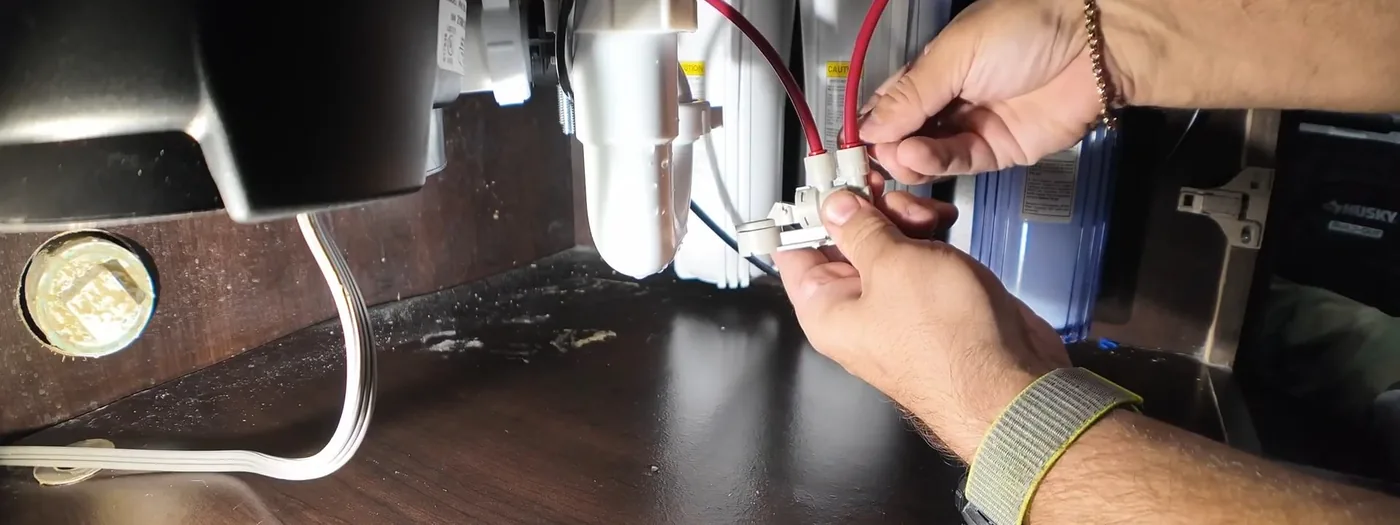
Plumbing work looks the same no matter which language describes it.
Homeowner GuidePlumbing Terms in English and Spanish: A Guide for Sierra Vista
In a bilingual community like Sierra Vista and the towns around it, describing a plumbing problem clearly can mean switching between English and Spanish. A homeowner more comfortable in Spanish may need the English word to tell a plumber what is wrong, or the reverse. This guide pairs the everyday plumbing terms in both languages, with a short explanation of each, so you can describe a problem and understand the answer no matter which language you start in.
En una comunidad bilingüe como Sierra Vista y los pueblos cercanos, describir un problema de plomería con claridad puede requerir cambiar entre inglés y español. Esta guía presenta los términos cotidianos en ambos idiomas, con una breve explicación de cada uno.
The Basics / Lo Básico
Start with the words that come up in almost every call. A faucet is a "llave" or "grifo." A sink is a "lavabo" in the bathroom or a "fregadero" in the kitchen. A toilet is an "inodoro" or "excusado." A pipe is a "tubería" or "tubo," and a leak is a "fuga" or "gotera." Water pressure is "presión de agua," and the water heater, a frequent topic here, is a "calentador de agua."
These few words cover a surprising share of household plumbing conversations. If you can name the fixture and say whether it leaks, drips, or will not drain, you have communicated most of what a plumber needs to start.
Describing the Problem / Describiendo el Problema
Naming the part is half of it. Describing what it is doing is the other half. A drip is a "goteo," and to leak is "gotear" or "tener una fuga." A clog is a "tapón" or an "obstrucción," and a clogged drain is a "drenaje tapado" or "desagüe tapado." A backup, when water comes back up, is a "retorno" of water. No hot water is "no hay agua caliente," and low pressure is "poca presión."
If a pipe bursts, that is a "tubería rota" or "tubo reventado," and it is the kind of emergency where you want to find the shutoff fast. The main water shutoff is the "llave de paso principal" or "válvula principal," and knowing that phrase, in either language, is genuinely useful in a hurry.
Around the House / Por la Casa
A few more terms round out the common vocabulary. A shower is a "regadera" or "ducha," and a bathtub is a "tina" or "bañera." A garbage disposal is a "triturador de basura." The drain itself is a "desagüe" or "drenaje," and a sewer is the "alcantarillado" or "drenaje." A water softener, given the area's hard water, is a "suavizador de agua" or "ablandador de agua," and hard water itself is "agua dura."
Out in the rural communities, where many homes use septic systems, a septic tank is a "fosa séptica" or "tanque séptico," and a well is a "pozo." These come up often in places like Naco and the southern valley, where wells and septic are the norm.
Why Clear Terms Matter
Plumbing problems are stressful enough without a language barrier adding confusion. The clearer you can describe what is happening, the faster the right help arrives and the less chance of a misunderstanding about what needs fixing. A homeowner who can say "agua caliente" and "fuga," or "leak" and "water heater," has already made the call go more smoothly.
This matters most in an emergency. When a pipe bursts and water is spreading, being able to say "tubería rota" or "burst pipe," and to ask where the "llave de paso" or shutoff is, can save real damage. A few key terms, ready in both languages, turn a frightening moment into a manageable one.
We Serve the Whole Community
Sierra Vista and the surrounding towns are home to families who speak English, Spanish, and often both, and good plumbing service means meeting people where they are. We are glad to work with homeowners in whichever language is most comfortable, and to explain a problem and its fix clearly, because plumbing should never be more confusing than it has to be. From Sierra Vista West to the border communities, that is how we approach every home.
Emergency Words / Palabras de Emergencia
Some terms you hope never to need, but they are the most important to know when you do. An emergency is an "emergencia," and to flood is "inundar," with a flood being an "inundación." If you smell gas, the phrase is "huele a gas," and it signals a situation to leave the home for before calling. To turn off the water is "cerrar el agua," and turning it off fast is often the first and most important step in any water emergency.
Keeping these words handy, in whichever language is not your first, is genuinely practical. In the stress of a real emergency, having the right phrase ready helps you act fast and communicate clearly with whoever is coming to help. A burst pipe at midnight is hard enough without fumbling for words.
Talking About Repairs / Hablando de Reparaciones
When the work begins, a few more terms keep you in the loop. To repair is "reparar," and a repair is a "reparación." To replace is "reemplazar" or "cambiar." An estimate or price is a "presupuesto" or "precio," and a part is a "pieza" or "refacción." If a plumber needs to access something, that is "acceso," and to install is "instalar."
Understanding these makes it easier to follow what a plumber recommends and to ask good questions about your options. You do not need to be fluent in either language to have a clear conversation. A handful of shared terms, plus a willingness on both sides to explain, is enough to make sure everyone understands the problem and agrees on the fix.
A Practical Habit / Un Hábito Práctico
One simple habit helps more than memorizing a whole list: keep a few key terms written down somewhere handy, in both languages, especially the emergency ones. The phrase for the main shutoff, the words for a burst pipe, and how to say there is no hot water are the ones you most want ready when something goes wrong. Un pequeño papel con estas palabras, en inglés y español, puede ahorrar tiempo valioso en una emergencia. Tener las palabras correctas a la mano hace que cualquier problema sea más fácil de resolver.
If you have a plumbing problem and want help describing it, or you simply want it handled by people who will explain things plainly, give us a call. Whether you start in English or Spanish, we will understand the problem and walk you through the answer. Si tiene un problema de plomería, llámenos, y con gusto le ayudamos en el idioma que prefiera.
Questions about your own home? We are a local, licensed plumber serving all of Cochise County, available any hour.
Call (520) 340-7175