
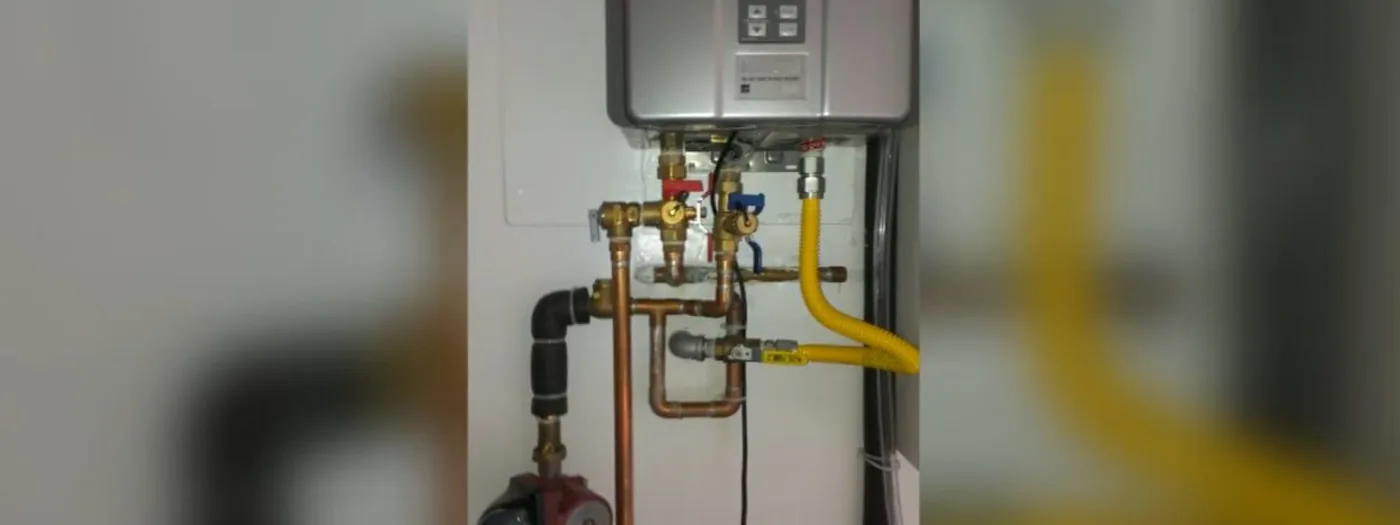
Hard water quietly shortens a water heater's working life.
Water QualitySigns Your Sierra Vista Home Needs a Water Softener
Most people in Sierra Vista know their water is hard. Fewer are sure whether it is worth installing a softener to deal with it. The honest answer is that it depends on what you are seeing around your home, so here is how to read the signs your house is already showing you.
None of these on its own proves you need a softener. Add a few of them together, though, and the case gets strong.
Sign 1: Scale You Can See and Feel
Start with the faucets. That crusty white buildup where water dries is calcium and magnesium left behind, and it is the most direct evidence of hard water. You will find the same deposits on showerheads, around drains, and on the glass of a shower enclosure. If you are wiping it away and it returns within days, that is hard water doing exactly what hard water does.
Showerheads tell the story well. When the spray starts going sideways or some of the holes stop flowing, scale has clogged the nozzles. A new showerhead fixes the symptom. Only treating the water fixes the cause.
Sign 2: Your Water Heater Failed Early
A storage water heater is often rated for ten to twelve years. In Sierra Vista, plenty of them quit well short of that. The culprit is usually sediment: minerals settling to the bottom of the tank, insulating the burner, and stressing the metal until it gives out.
If your last heater died young, or your current one rumbles and pops when it runs, hard water is the likely reason. A softener will not revive a failing tank, but it slows the process dramatically on the next one. We see this pattern constantly on water heater calls across the city, especially in neighborhoods like Country Club Highlands where the homes have been through a heater or two.
Sign 3: Dishes and Glassware Never Look Clean
You run the dishwasher, and the glasses come out cloudy or spotted anyway. You rinse, you use a rinse aid, and it barely helps. That haze is a thin mineral film, not a dirty-dish problem. Hard water leaves it behind as the water dries, and no amount of scrubbing prevents it because the minerals are in the water itself.
Sign 4: Soap and Detergent Disappear Fast
Hard water and soap do not get along. The minerals interfere with lathering, so you use more soap, more shampoo, and more laundry detergent to get the same result. If you find yourself refilling faster than seems reasonable, the water may be the reason. Soft water lathers with far less, which over time offsets part of a softener's cost.
Sign 5: Skin and Hair Feel Off
This one is subtler and more personal. Some people find that hard water leaves their skin dry and their hair dull or filmy, because soap does not rinse away cleanly. It is not universal, but it is common enough that the change after installing a softener is one of the first things people mention. Showers simply feel different.
Sign 6: Reduced Flow Over Time
If the water pressure at a fixture has slowly faded over the years, scale narrowing the lines and clogging the aerator may be part of it. This is more common in older homes where decades of buildup have accumulated, and it sometimes overlaps with aging pipe that has its own problems. A plumber can tell you which it is.
What to Expect at Installation
If the signs point to a softener, the process is straightforward. The work starts with sizing. A softener that is too small regenerates constantly and wastes salt and water. One that is too large costs more than it needs to. We size the unit to your household, your water use, and your measured hardness, so it runs efficiently for the way you actually live.
Most installs tie in near where the main water line enters the home. Given how many homes here are built on a slab, that is often in the garage. We handle the plumbing connection, the bypass valve, and the drain line, and we position the unit so refilling salt and servicing it later are easy. A typical install is a same-day job.
Living With a Softener
Maintenance is light. The main task is keeping the brine tank topped up with salt, which is a quick chore every few weeks depending on your use. The system handles its own regeneration on a schedule. That is essentially the whole commitment.
What About Salt-Free Conditioners?
You will see salt-free systems advertised as softeners. Strictly speaking, they are conditioners: they change how the minerals behave so they are less likely to stick, but they do not remove the hardness. For the levels common here, most homeowners who want true soft water, the kind that ends the spots and protects appliances, choose a salt-based system. We are happy to walk through the trade-offs for your situation rather than pushing one or the other. For most homes here, the goal is true soft water, and a salt-based system is what delivers it reliably at the hardness levels the area sees.
Deciding for Your Home
Tally up the signs. Scale on the fixtures, an early water heater failure, cloudy dishes, soap that vanishes, and showers that feel filmy all point the same direction. If you are seeing several, a softener will likely pay for itself in appliance life and daily quality, and you will notice the difference within a day of turning it on.
What a Softener Will Not Do
It is worth being clear about the limits, because a softener is not a cure-all. It removes the calcium and magnesium that cause scale, and that is its whole job. It does not improve the taste of your water, remove sediment, or filter out other dissolved solids. If your water tastes flat or carries an odor, that is a job for filtration, not softening.
This is why many homes pair the two. A softener protects the plumbing and appliances, and a separate filter, or a reverse osmosis system at the kitchen sink, handles taste and drinking-water quality. The two work together rather than competing. When we install a softener, we can plan the layout so a filter or an RO unit drops in cleanly later, whether you add it the same day or down the road. Knowing what each piece does keeps you from buying the wrong solution for the problem you actually have.
Not sure where you land? Give us a call. We can assess your water and your home and tell you honestly whether a softener is worth it for you. For the background on why the water is hard in the first place, our guide on how hard Sierra Vista's water is and why covers the geology behind it.
Questions about your own home? We are a local, licensed plumber serving all of Cochise County, available any hour.
Call (520) 340-7175