
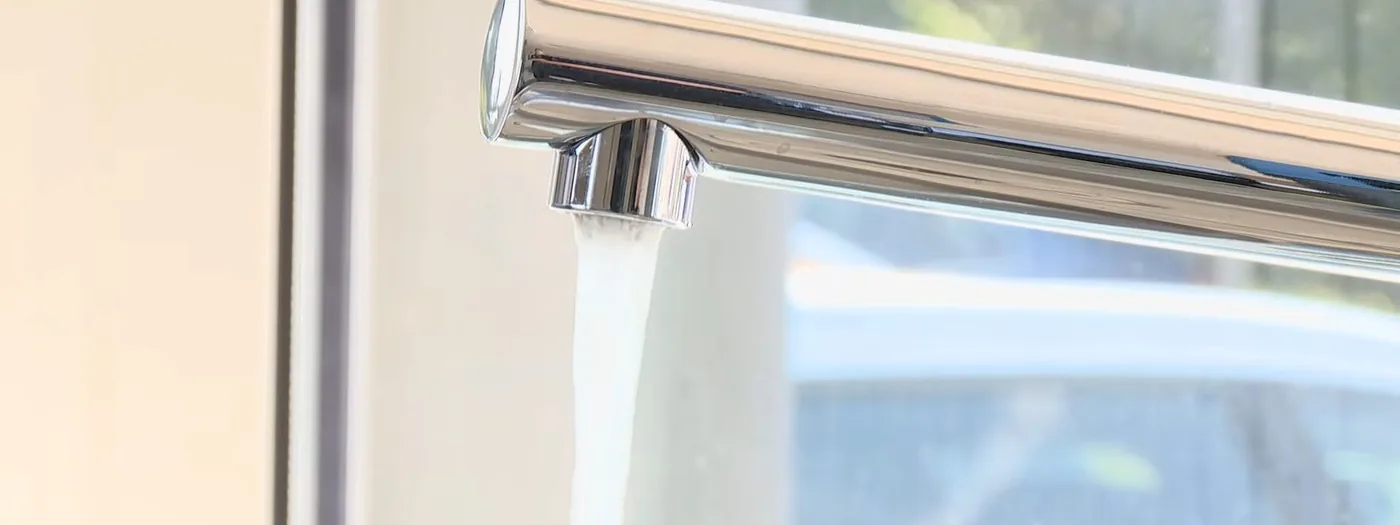
This is the kind of buildup that forms inside fixtures fed by hard water.
Water QualityHow Hard Is Sierra Vista's Water? What Cochise County Homeowners Should Know
Run your hand over a faucet that has been in service a few years in Sierra Vista and you will feel it: a chalky, crusted ridge of white mineral where water dries. That is the most visible sign of hard water, and around here it is nearly universal. Homeowners notice the spots on their glasses, the film on the shower door, and the water heater that gave out sooner than expected. The question worth answering is why, and what it actually means for your house.
The short version: Sierra Vista water is hard, and the reason is the rock it travels through. Understanding that helps you decide whether to do anything about it.
Where Your Water Comes From
Almost all of the water in and around the city is groundwater, pumped from the Upper San Pedro Aquifer that sits beneath the high desert. Depending on where you live, it reaches your tap through one of a few providers. Most of incorporated Sierra Vista is served by Arizona Water Company. Parts of the city are served by Liberty Utilities, the operation many longtime residents still call Bella Vista Water. The master-planned Pueblo Del Sol community has its own provider, Pueblo Del Sol Water Company. Head south into the rural country toward Hereford and Palominas and many homes leave utilities behind entirely, drawing from private wells.
What ties all of them together is the source. The groundwater here moves through limestone and other mineral-bearing rock, and as it does, it dissolves calcium and magnesium. Those two minerals are what "hardness" measures. The more of them the water carries, the harder it is.
So How Hard Is It, Really?
Hardness is measured either in grains per gallon or in milligrams per liter of calcium carbonate. Pueblo Del Sol Water Company publishes its own figure, and it lands at roughly eight grains per gallon, which is about 140 milligrams per liter. Other parts of the area, served by different wells, run higher. As a rule of thumb, anything above seven grains per gallon is considered hard, and above ten and a half is very hard.
That puts Sierra Vista's water solidly in the hard range, with pockets that push into very hard. It is not the hardest water in Arizona, and it is not a health problem. The minerals are the same ones found in many bottled mineral waters. But hard is hard, and your plumbing feels it every single day.
A Quick Note on Wells
If you are on a private well south of the city, none of the published utility numbers apply to you. Well water hardness varies property to property, sometimes dramatically, depending on the depth of the well and the specific geology it taps. The only way to know your number is to test. That is worth doing before you spend money on any treatment, so the system you buy actually matches your water.
What Hard Water Does to a House
Scale is the headline. Every time hard water is heated or left to evaporate, it leaves its minerals behind as a hard, chalky deposit. On a faucet that is cosmetic. Inside your plumbing and appliances it is not.
Consider the water heater. Each gallon it warms drops a little calcium to the bottom of the tank. Over years that sediment builds into an insulating layer that traps heat against the metal, makes the burner work harder, and shortens the life of the unit. It is the single biggest reason local water heaters rarely reach their full rated lifespan without help. If you have ever heard a water heater rumble or pop, that is the sound of water bubbling up through a bed of sediment.
The same buildup narrows pipes over decades and coats the inside of dishwashers and washing machines. It fouls the small passages in faucets and toilet valves, and leaves the spots and film you fight on dishes and shower glass. Soap struggles too, since hard water keeps it from lathering, which is why you reach for more detergent than the bottle says.
What You Can Do About It
The standard answer is a whole-home water softener. A softener uses a process called ion exchange to swap the calcium and magnesium for a small amount of sodium, so the water reaching your taps no longer leaves scale. The payoff shows up fast: clearer glassware, softer-feeling water, less soap, and appliances that last longer because they are no longer fighting mineral buildup. We cover the signs that point to one in our guide on whether your home needs a water softener.
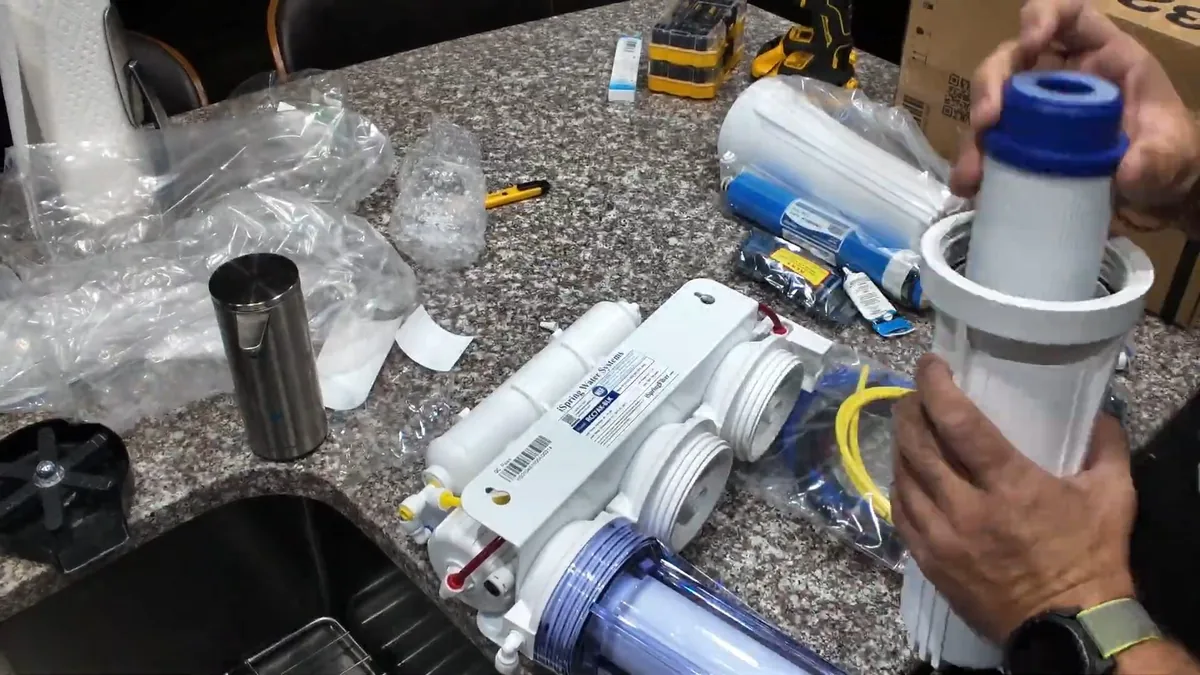
A softener handles hardness, but it does not change taste or remove other dissolved solids. Homeowners who want their drinking water polished further often add a reverse osmosis system at the kitchen sink, which pairs naturally with a softener. The softener protects the whole house and the RO membrane. The RO handles the glass you drink from.
Does Every Home Need One?
Not necessarily, but most homes here benefit. If your fixtures crust over quickly, your dishes never come out clear, or your last water heater failed early, the water is making the case for you. Newer homes are not exempt, either. The pipes in a recent build may be modern, but the water running through them is the same hard groundwater. A home in a newer neighborhood scales up just like an older one in Mountain View or Pueblo Del Sol.
The Bottom Line for Cochise County Homes
Sierra Vista's water is hard because it comes from limestone groundwater, and short of moving the aquifer, that will not change. What you can change is what it does to your home. A correctly sized softener turns a daily nuisance into a non-issue and quietly protects thousands of dollars of plumbing and appliances along the way.
What Hard Water Costs You Over Time
It helps to think of hard water as a slow, steady tax on the house. None of its effects is dramatic on a given day, but they add up. A water heater that should last a dozen years gives out in seven or eight, so you buy more of them. Dishwashers and washing machines wear faster as scale builds on their internal parts. You buy more soap, more detergent, and more rinse aid than a soft-water household does, month after month.
Add the cosmetic toll, the fixtures that look tired and crusted years before they should, and the picture is of a home quietly spending more than it needs to. A softener does not pay for itself overnight, but over the years it usually comes out ahead in appliance life and reduced upkeep. That is the practical case for treating the water rather than just living with it, and it is why a softener is one of the first upgrades we suggest for an older home.
Weighing whether a softener makes sense for your water? On a well and want to know your actual hardness first? We are glad to help you sort it out. Call us and we will give you a straight answer based on your specific situation, not a sales pitch.
Questions about your own home? We are a local, licensed plumber serving all of Cochise County, available any hour.
Call (520) 340-7175