
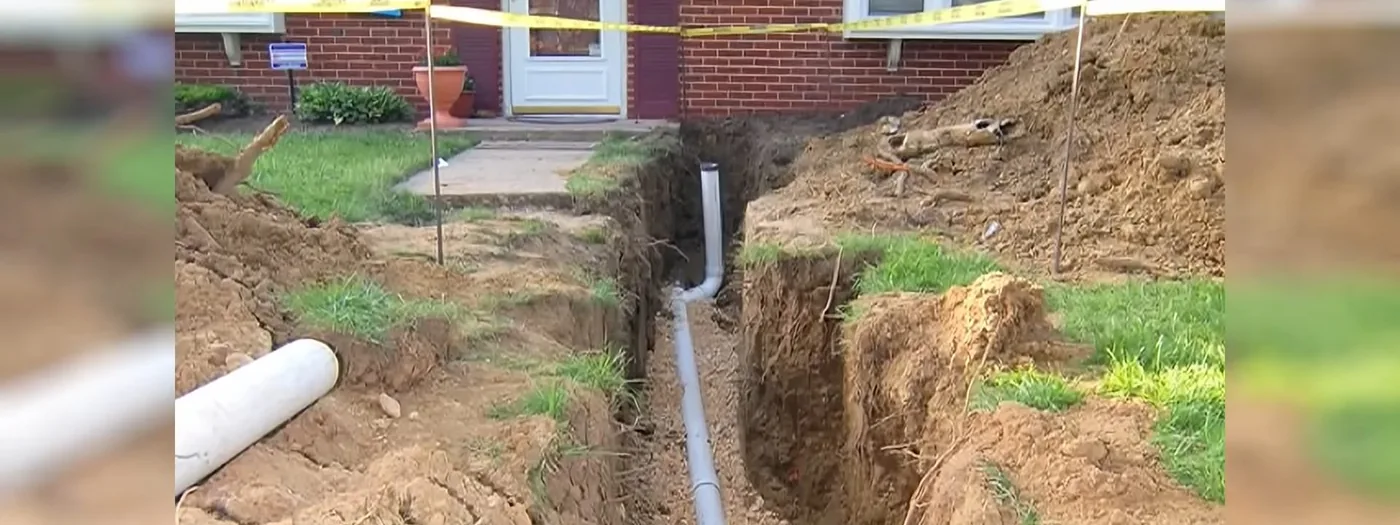
Color-coded pipe marks the line clearly for anyone digging nearby later.
Sewer & SepticCity Sewer vs. Septic: A Guide for Homeowners South of Sierra Vista
Inside Sierra Vista, most homes connect to a municipal sewer, and the waste side of plumbing is something you rarely think about. Move a few miles south into the rural country toward Hereford, Palominas, and Naco, and the picture changes. Out there, many homes are on septic systems, and that difference matters more than newcomers often realize. If you are buying or already living in a rural property south of the city, here is what you need to know.
The Basic Difference
A municipal sewer carries your household waste away through a city-maintained pipe network to a treatment plant. You pay a utility, and apart from keeping your own lines clear, the system is not your responsibility once it leaves the property.
A septic system is self-contained sewage treatment for a single property. Your waste flows into a buried tank in the yard, and from there the treated liquid disperses into a drainfield where the soil filters it. There is no city utility behind it. The system is yours to maintain, and how well you maintain it determines whether it quietly works for decades or fails expensively.
Who Has Which
As a general rule, incorporated Sierra Vista neighborhoods are on municipal sewer. The rural communities to the south, spread along the San Pedro valley, are largely on septic. Hereford, Palominas, and Naco are classic septic country, as are many properties around Whetstone and St. David. The same areas often rely on private wells for water, which makes a rural home a fully self-contained operation for both its water and its waste.
How a Septic System Works
Understanding the basics helps you take care of one. Waste enters the tank, where it separates. Solids sink to the bottom and form a layer of sludge. Lighter material, grease and the like, floats to the top as scum. The relatively clear liquid in the middle flows out to the drainfield, a network of perforated pipes in gravel-filled trenches, where it percolates down through the soil and is naturally filtered.
The whole thing depends on that separation holding. When the sludge layer builds up too far because the tank has not been pumped, solids start carrying out to the drainfield and clogging it. A clogged drainfield is the failure nobody wants, because it is the expensive part to replace.
What Septic Ownership Asks of You
The good news for anyone nervous about septic is that the maintenance is infrequent and simple once you know it.
Pump on a Schedule
The single most important habit is regular pumping. How often depends on tank size and how many people the household has, but many homes do well pumping every few years. Pumping removes the accumulated sludge before it can reach the drainfield. The cost of routine pumping is minor next to replacing a failed drainfield, which is one of the more expensive repairs a rural homeowner can face.
Watch What Goes Down
A septic tank runs on bacteria that break down waste, and harsh chemicals, grease, and non-degradable items disrupt or clog the system. Keep paint, solvents, and large volumes of bleach out of the drains. Do not treat the toilet as a trash can. Cooking grease belongs in the bin, not the sink.
Protect the Drainfield
The drainfield is the most expensive part to replace and the easiest to protect. Keep vehicles and heavy equipment off it so the soil does not compact. Direct roof and surface runoff away from it. And avoid overloading it by spacing out heavy water use, like running every load of laundry on the same day.
Signs of a Septic Problem
A septic system warns you before it fails outright. Slow drains throughout the house, not just one fixture, are an early sign. So are gurgling sounds in the plumbing, sewage odors indoors or near the tank and drainfield, and patches of grass over the drainfield that are suddenly greener or soggier than the rest of the yard. Backups into the lowest drains in the home are the alarm that the system needs attention now. Any of these is worth a prompt call rather than a wait-and-see, since rural septic problems rarely resolve on their own.
The reason for urgency is simple economics. A septic issue caught at the gurgling-drain stage is often resolved with a pumping and a minor adjustment. The same issue ignored until sewage is surfacing in the yard or backing into the house can mean a damaged drainfield, which is among the most expensive repairs a rural property faces. Acting on the early warning is almost always the cheaper path, and it spares you the mess of a full backup.
New to Septic? You Will Be Fine
For homeowners coming from a lifetime on city sewer, a septic system can feel intimidating. There is no city main quietly taking everything away. The tank in the yard is the system. But once you understand the rhythm, pump on schedule, mind what goes down the drain, and protect the drainfield, it is genuinely low-maintenance. Plenty of rural Cochise County families have run the same system for decades without drama.
Why It Matters When You Drain a Tub or Flush
One practical difference catches newcomers off guard: on septic, what you put down the drain has consequences a city sewer hides. On municipal sewer, a treatment plant downstream handles harsh chemicals and heavy loads. On septic, the bacteria in your own tank do that work, and overwhelming them causes problems you will be paying to fix.
That changes a few habits. Garbage disposals can be used, but sparingly, since they add solids the tank has to handle. Long, frequent backwashing from a water softener can affect some systems, so it is worth setting up correctly. Even something as simple as doing every load of laundry on one day sends a surge of water through the system that a spread-out schedule avoids. None of this is difficult, and none of it should scare anyone off a rural home. It is just a shift in mindset from a system you never think about to one that rewards a little awareness. Once it becomes routine, you stop noticing it at all.
If you have just moved to a property south of the city and are not sure when the tank was last serviced, that uncertainty is itself a good reason to have it inspected. We are glad to check the system, pump it if it is due, and walk you through everything you need to know. And if you are weighing a rural home, call us before you buy. Knowing what you are getting into with the well and septic beats finding out the hard way after closing.
Questions about your own home? We are a local, licensed plumber serving all of Cochise County, available any hour.
Call (520) 340-7175